
If you’ve been nursing a case of Achilles tendonitis, golfer’s elbow, or plantar fasciitis for more than three months, you know the frustration of the “healing plateau.” You’ve tried the ice, the anti-inflammatories, and the rest, yet that first step out of bed still feels like stepping on a LEGO made of broken glass.
The problem? Your tendon isn’t “inflamed”—it’s stuck. Chronic tendinopathy is often a degenerative state (tendinosis) where the body has essentially “stalled” on the repair process. This is where Extracorporeal Shockwave Therapy (ESWT) steps in. It’s not magic; it’s a high-energy mechanical “wake-up call” for your tissues.
What is Shockwave Therapy?
Despite the name, there are no electric shocks involved. Shockwave therapy uses high-energy acoustic (sound) waves that are pulsed into the damaged tissue.
Think of it as a “controlled micro-trauma.” By creating tiny, therapeutic insults to the stubborn tendon, the shockwaves trigger a biological cascade:
- Angiogenesis: It forces the growth of new micro-blood vessels (tendons notoriously have poor blood supply and therefore slow and stubborn healing).
- Collagen Synthesis: It jumpstarts the production of the “building blocks” needed to repair the tendon’s structural integrity.
- Pain Modulation: It overstimulates the nerve endings in the area, often providing immediate (albeit temporary) pain relief.
The Philosophy: Quality Over Quantity
At the Institute for Sports Physiotherapy and Performance, we don’t just “blast” the area and hope for the best. We train all our patients on the importance of quality over quantity, stability over power, and precision in motion. Many practitioners make the mistake of using too much power (intensity) too soon. More “noise” doesn’t mean more healing. We adjust the settings on our top-of-the-line shockwave machine in order to get the waves to “break” (Like a whitecap on a lake) at the location of injury.
What to Expect
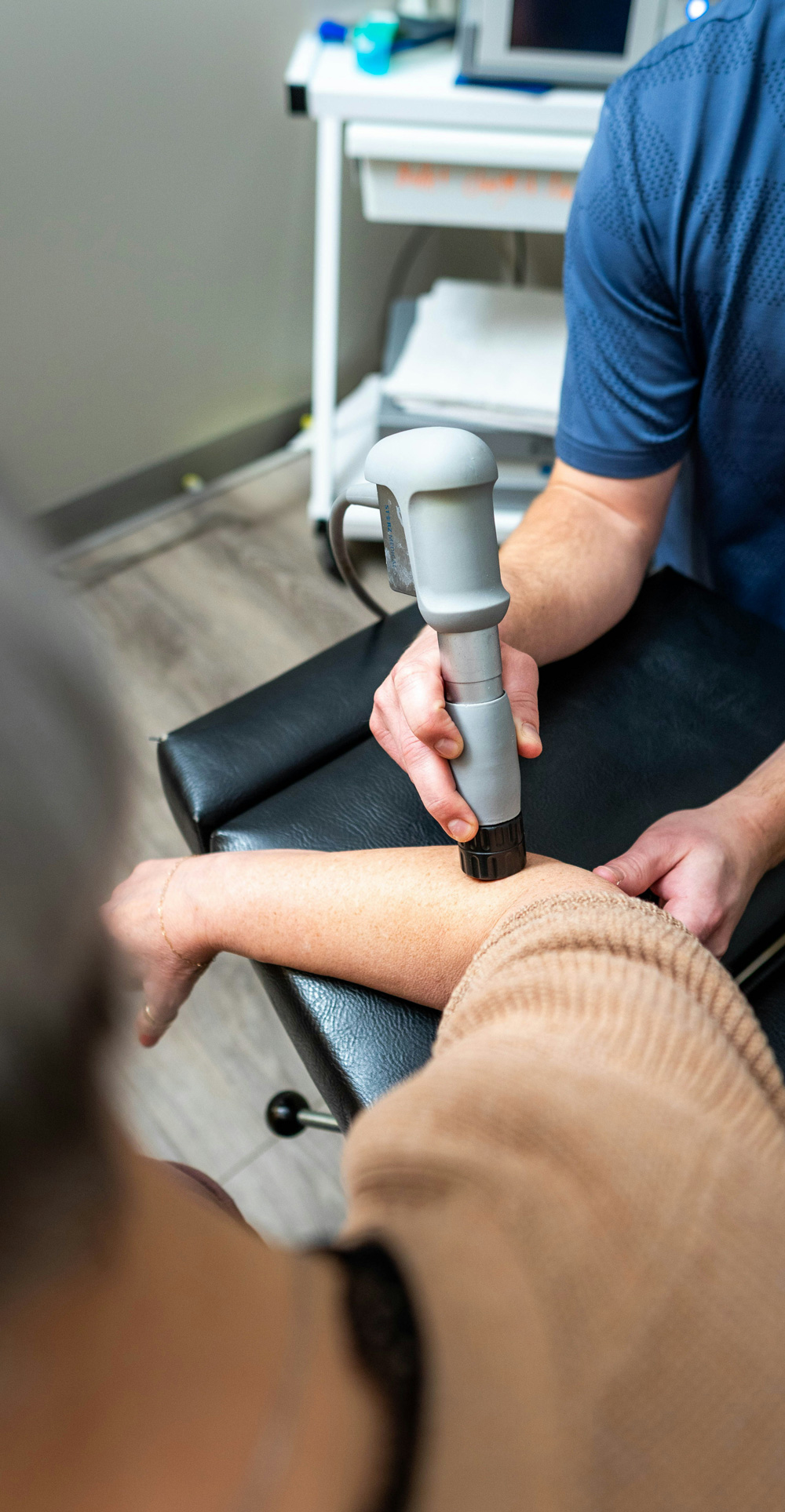
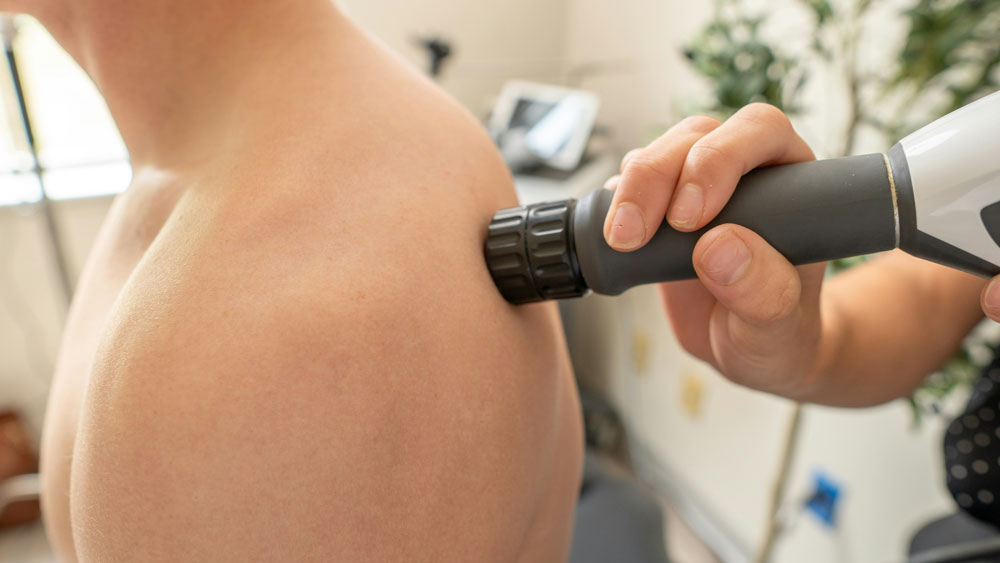
A typical session is quick—usually 10 to 15 minutes. You’ll feel a “tapping” or “thumping” sensation. In the more sensitive spots, patients usually describe it like an elastic band snapping on the skin. While it can be slightly uncomfortable, it should never be unbearable. Most patients require 4 to 5 sessions spaced a week apart followed by 1 month of no shockwave but continued strengthening. At that point we will reevaluate to determine if another dosage schedule is recommended
Stability Over Power: The Post-Shockwave Care
One mistake patients make is feeling “great” immediately after a session and heading straight out for a five km run. Shockwave therapy creates a “window of opportunity” where pain is low, but the tissue is actually temporarily vulnerable due to the micro-trauma we’ve induced, you just don’t feel it yet.
This is why we focus on stability over power. In the 48 hours following a session, your job isn’t to test the tendon’s strength; it’s to provide it with the stability it needs to begin the remodeling process. We use Shockwave to “open the door,” but the precision of your follow-up rehabilitation exercises is what actually walks you through it. This is specific to each patient as the root cause of the dysfunction can vary. The specialized physiotherapist at the Institute for Sports Physiotherapy will guide you in the correct direction.
Is It Right for You?
Shockwave is a “heavy hitter.” It’s generally reserved for those who haven’t responded to traditional physiotherapy after 6–12 weeks. If you’re tired of managing a “quiet” injury that refuses to go away, it might be time to stop resting and start regenerating. Book an appointment today and the clinicians at the Institute for Sports Physiotherapy will discuss if shockwave therapy could be beneficial for you.