
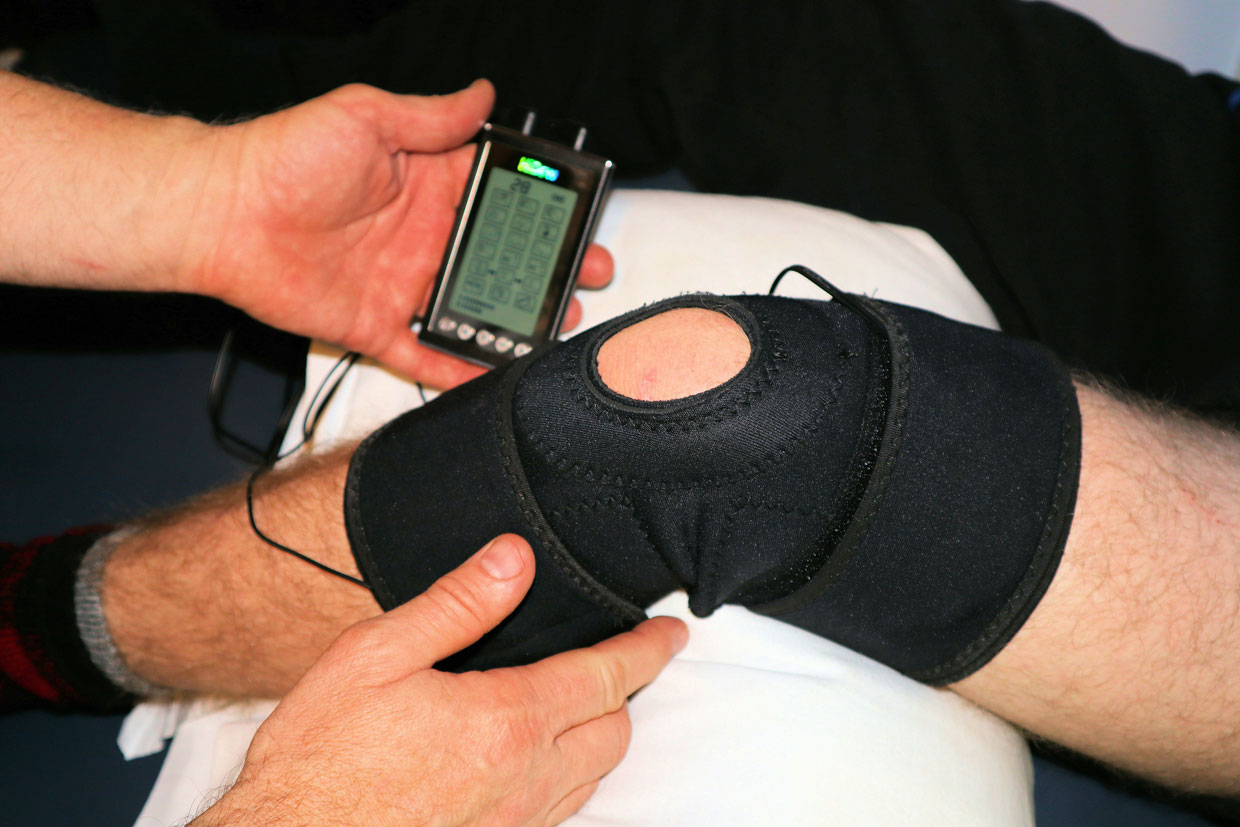
If you’ve ever been to a physiotherapy clinic where you were led to a curtained booth, wrapped in a hot pack, and hooked up to a “tingly” machine for 20 minutes before being sent on your way—we have some news for you.
That isn’t physiotherapy. That’s a spa treatment with medical branding.
In 2026, the science is clearer than ever: while heat and TENS (Transcutaneous Electrical Nerve Stimulation) have their place for temporary comfort, they are “passive” treatments. They happen to you. To actually fix an injury and ensure it stays fixed, you need the powerhouse combination of Manual Therapy and Active Rehab.
Here is why we’ve moved beyond the “heat and beep” era and why your recovery depends on a more hands-on, movement-based approach.
The “Mute Button” vs. The Root Cause
Think of pain like a loud fire alarm going off in your nervous system.
- Heat and TENS are like hitting the mute button. The heat increases blood flow and relaxes muscles temporarily; the TENS machine sends electrical pulses that “distract” your brain from feeling pain. Similar to rubbing your shin after smashing it off the coffee table.
- The Catch: As soon as you take the pads off, the mute button is released. The alarm is still blaring because the underlying “fire”—the stiff joint, the compressed nerve, or the weak muscle—hasn’t been addressed.
Step 1: Manual Therapy – “Clearing the Path”
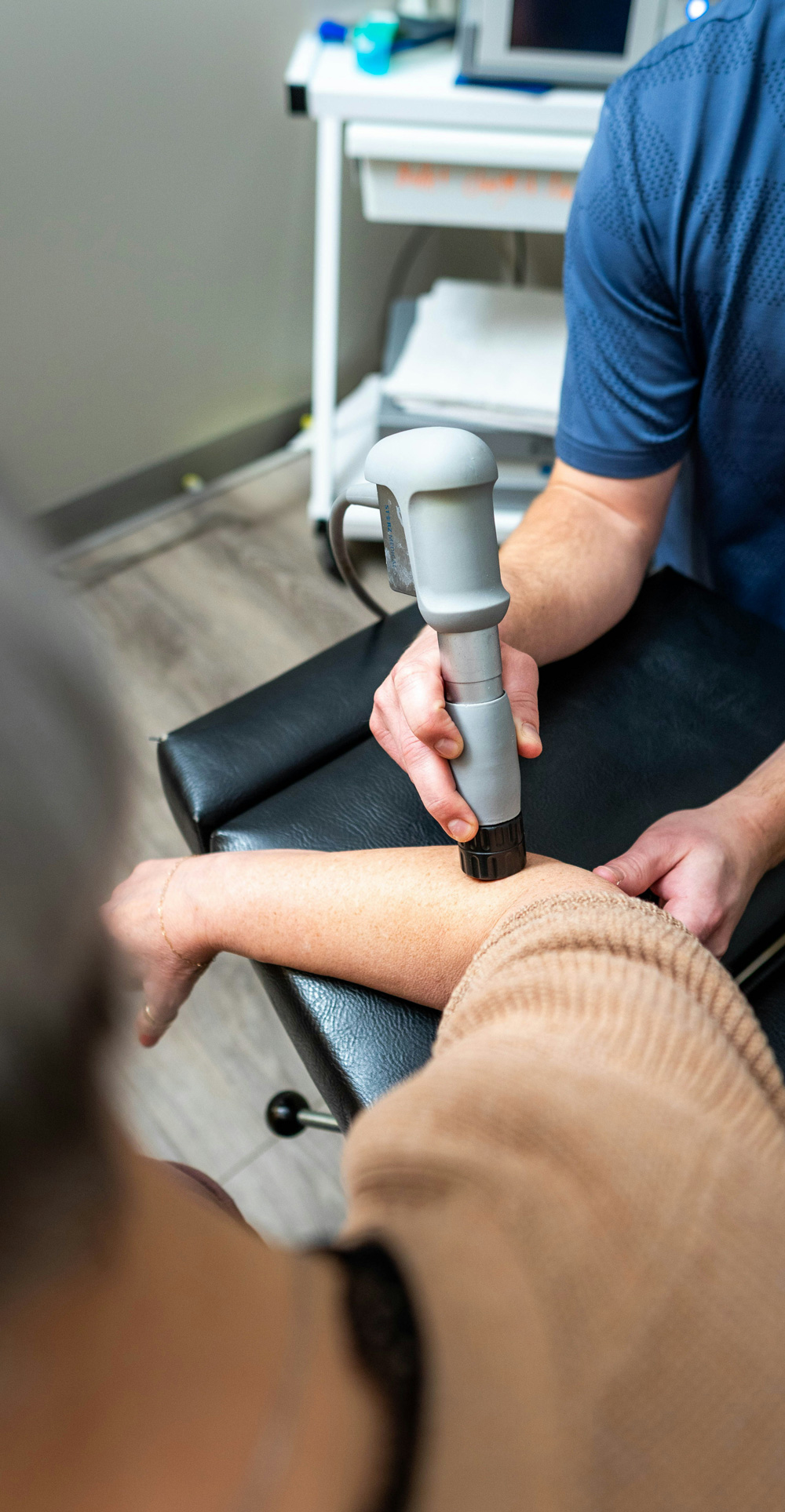
At The Institute for Sports Physiotherapy, we don’t let a machine do our job. We use Manual Therapy—skilled, hands-on techniques like joint mobilizations, myofascial release, and dry needling—to physically change how your tissues move.
Manual therapy isn’t just a bad massage. It is a clinical intervention designed to:
- Restore Joint Mechanics: “Unsticking” a facet joint in your back or a stiff ankle.
- Desensitize the Nervous System: Calming down overactive pain signals so you can move without guarding.
- Increase Range of Motion: Breaking the cycle of stiffness that keeps you from reaching or bending.
Step 2: Active Rehab – “Locking in the Gains”
Manual therapy opens a “window of opportunity” where you have less pain and more movement. Active Rehab is how we climb through that window and stay there.
By using specific, loaded movements, we trigger a biological process where your cells transform mechanical pressure into a signal to build stronger tissue. We use precision loading to ensure you aren’t just “doing exercises,” but actually rebuilding your body.
Active Rehab provides:
- Neural Adaptation: Teaching your brain to fire muscles in the correct sequence and timing.
- Structural Strength: Thickening tendons and strengthening muscles so they can handle your life—whether that’s lifting a toddler or training for a marathon.
- Long-term Resilience: Ensuring the injury doesn’t just “go away,” but never comes back.
The ISP Approach: We Work Together
At The Institute for Sports Physiotherapy, we believe your time is too valuable for 20 minutes of “Heat and Beep”. Our sessions are built on a “hybrid” model: we use our hands to get you moving, and then we use movement to get you stronger.
The result? You don’t just feel better for an hour; you become more capable than you were before you got hurt. Book an appointment today to see (and feel) the ISP difference.