
When the puck drops at the WFCU Centre, the fans see the speed, the hits, and the goals. But for Jennie Love, the Head Athletic Therapist (AT) of the Windsor Spitfires, the game is just a small chapter in a day that starts long before the sun rises over the Detroit River and ends long after the Zamboni has cleared the ice.
An OHL Athletic Therapist wears many hats: part first responder, part kinesiologist, part confidant, and occasionally, part equipment assistant. Here is what it takes to keep the Spits in fighting shape during their 2026 season and playoff run.
06:30–07:00 AM – Setting the Tone
The day starts early at the rink, not for the players, but for Jennie. Getting her own workout in is a non-negotiable part of her routine. It sets the tone for the entire day, feeling strong, focused, and ready.
Taking care of herself is essential so she can perform at her best when taking care of the athletes. It’s not just physical preparation; it’s mental clarity before the pace of the day picks up.
Once Jennie has taken care of herself, time to get ready for the controlled chaos.
- Preparation: Setting up the therapy room with tape, treatment tools, and anything needed for the day ahead.
- Communication: Answering morning emails and connecting with medical staff about player updates.
- Coordination: Working with coaching staff and management on expected player availability for the day.
- Teamwork: Collaborating with equipment staff to ensure everything is dialed in before players step in.
08:00-9:00 AM – The Morning Triage
The day starts in the clinic or hallway around the rink. Before the players even hit the ice for morning skate, Jennie is busy managing the “Injury List.”
- The Progress Check: This is when Jennie assesses players in the mid-to-late stages of rehab. Are they hitting their strength benchmarks? Is that AC joint stable enough for a full intensity hit? Also re-assessing any areas of concerns for any of the athletes.
- Collaboration: A quick meeting with the rest of the medical team and the coaching staff to finalize the “lineup availability.” Jennie provides the green light (or red light) that dictates the day’s practice lines.
Coffee is usually consumed with one or two hot sips and 30 cold ones between the never-ending stream of athletes asking for treatment.
09:00 AM – The Therapy Room Comes Alive
Players begin to arrive, and the therapy room quickly becomes the hub of activity.
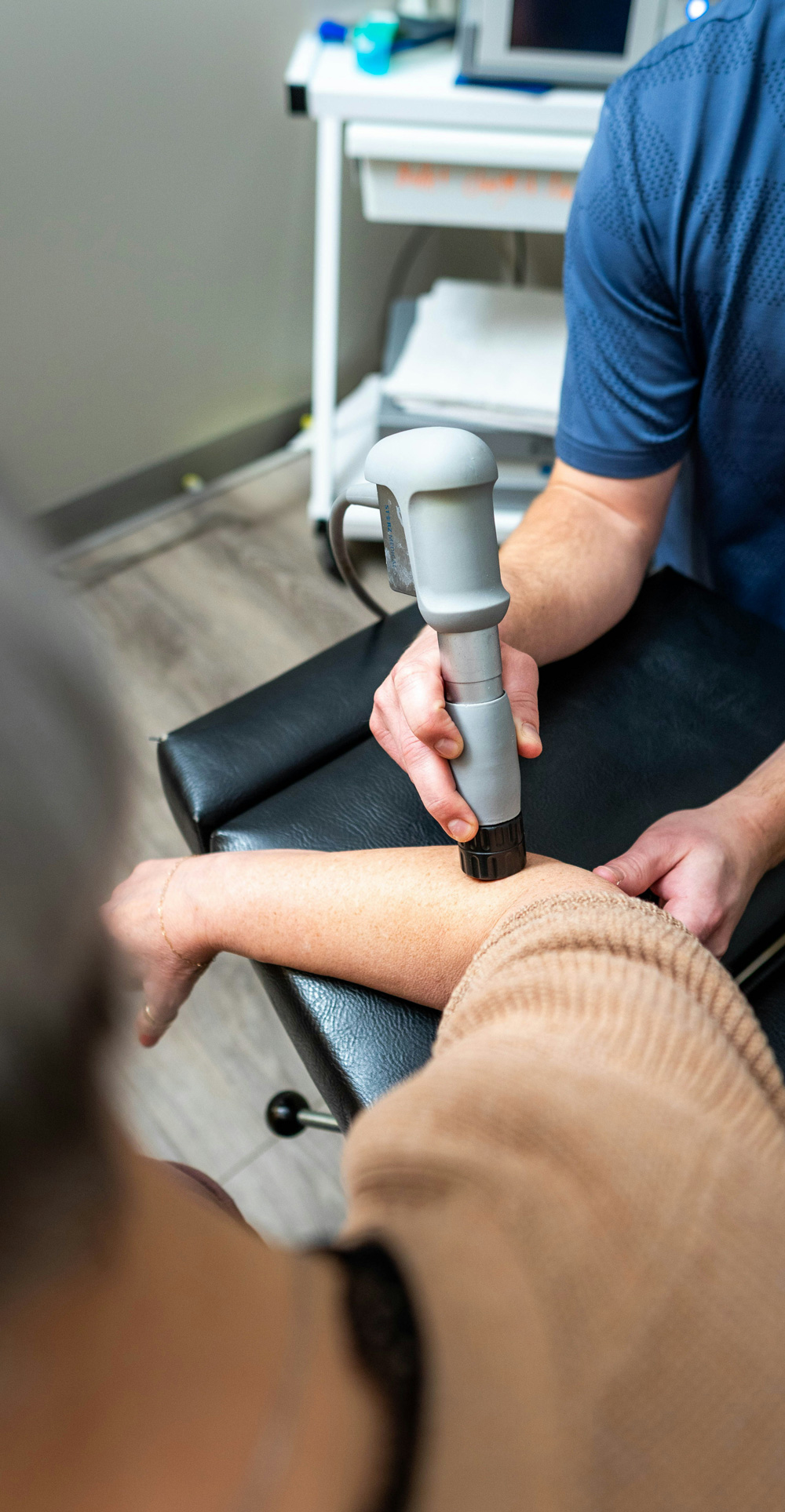
- Morning treatments and Stretching routines: Some areas can be stretched out by the player; others require some manual therapy to get loose.
- Tape jobs: Jennie uses the roll of tape the way an artist uses a brush to paint a masterpiece. Her canvas is bony, uneven surfaces, hairy and never stays still while she is working her magic.
- For a high-level junior player, the tape isn’t just about injury—it’s about proprioception, confidence and sometimes superstition. Every player has a specific preference, and Jennie knows exactly how much tension each player likes and how to adapt the tape to provide support without impeding functionality.
It’s controlled chaos, every player has a need, a routine, or something that needs attention before stepping on the ice.
10:00 AM – Practice Coverage & Emergency Prep
While the team is on the ice, Jennie is stationed on the bench. She isn’t just hanging out and watching the play; she is scanning for “mechanism of injury” like a hawk. She sees the awkward fall in the corner or the slight limp after a blocked shot before anyone else does.
Between drills, she is checking the Emergency Action Plan (EAP) and running through different emergency scenarios in her head. In a high-impact sport like hockey, the medical team must be prepared for everything from a minor bruise to a major laceration, a spinal emergency or a cardiac event. Jennie is the tip of the spear in these situations being the first medical professional on the ice and taking control of any situation she is confronted with.
11:00 AM – Post-Skate Reset
As soon as the skate ends, the work continues.
- Cleaning and resetting the bench area and clinic space
- Post-skate treatments
- Getting players set up and ready for the rest of the game day
There’s no downtime, just a transition into the next phase of preparation.
1:00 PM – The “Hidden” Work: Admin, Nutrition and even more Treatment
Once the rink clears, the behind-the-scenes work begins.
- Documentation: Every treatment, tape job, and ice pack must be logged for OHL compliance.
- Treatment: Jennie is always on call.
- Nutrition: The AT often coordinates the post-practice meal with Kyla, ensuring players are getting the high-protein, anti-inflammatory nutrients discussed in their recovery protocols. If Jennie is lucky, she might get 5 minutes of silence for her own nutrition.
- Game Prep: Final Checks prior to game time.
4:00 PM – All Hands-On Deck
Players return to the rink, and everything ramps up again.
- Preparing hydration drinks alongside Kyla
- Pre-game stretching and treatments
- Tape jobs and individual athlete routines
- Team warm-ups
Jennie also checks in with the full medical team, paramedics, doctor, and dentist, to review emergency protocols so everyone is aligned and ready if needed.
This is full focus mode, every detail matters before puck drop.
7:00 PM – Game Time: The Focused Observer
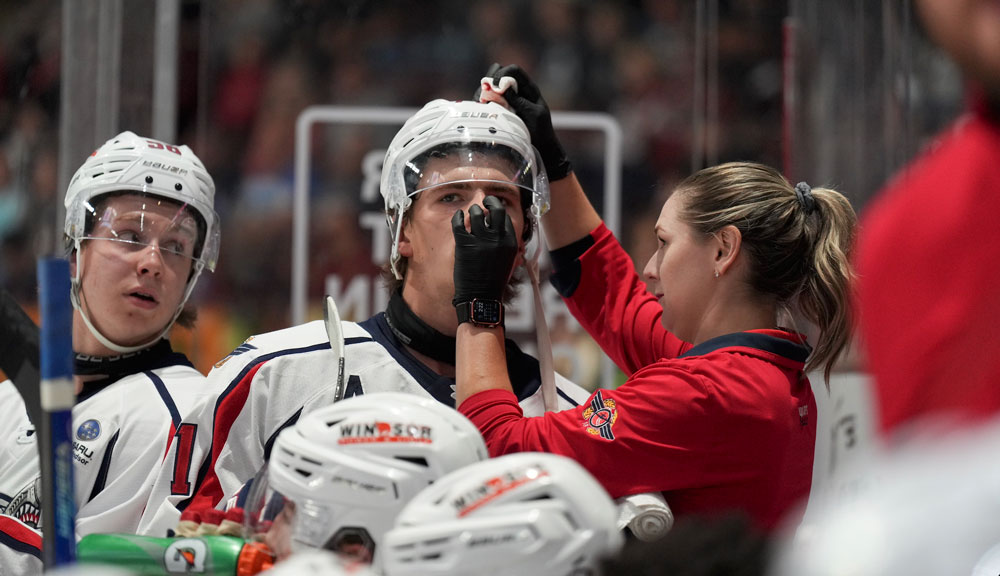
On game nights, the adrenaline spikes. Jennie stands behind the bench with a specialized medical kit on her hip. Her job, along with the rest of the on-site medical team, is to remain the calmest person in the arena regardless of what happens. Whether it’s helping the doc stitch up a chin in the locker room between periods or managing a concussion protocol, Jennie’s priority is always player safety over the scoreboard.
Jennie is always ready for the medical emergencies she trains for but being an AT involves being ready for anything.
- A towel to clean a dirty visor
- Pickle juice for muscle cramps
- Or even just a quick tap on the back when a player needs a morale boost
The Long Haul
Being the AT for the Windsor Spitfires isn’t a 9-to-5, Monday to Friday job; it’s a lifestyle involving long weekends, holidays, missed time with family and friends, long hours on the bus, and a lot of caffeine at times. Sometimes it even includes a quick nap on a treatment table.
A successful day for any Sports Medicine professional (Doc, AT, Sports Physio) is one where they are the most important person in the building that nobody notices. If the players are healthy and the game goes smoothly, they have done their job. If they are busy, someone else is having a bad day.
Best of Luck to Jennie, Kyla and the Windsor Spitfires on the rest of their 2026 season and Playoff run. The Institute for Sports Physiotherapy and Performance is proud to have the expertise and experience of Jennie and Kyla in the clinic when they are not traveling with the Spits. You can book with Jennie 24/7 at https://instituteforsportsphysiotherapy.janeapp.com/