
When people talk about building a “strong core,” the conversation usually revolves around visible abdominal muscles or holding a plank for minutes on end. But from a biomechanical perspective, your core doesn’t stabilize your spine merely by pulling on bones like a series of rigid cables. Instead, it functions primarily as a dynamic, pressurized cylinder.
The secret to true spinal stability isn’t just muscular contraction—it is Intra-Abdominal Pressure (IAP) and the proper muscular control needed to maintain this through movement.
The Pressure Cylinder: How IAP Works
To understand IAP, picture a sealed pop can. Unopened, the internal pressure against the walls makes the thin aluminum can almost uncrushable under high downward loads. Open the can and release that internal pressure, however, and the structure easily buckles.
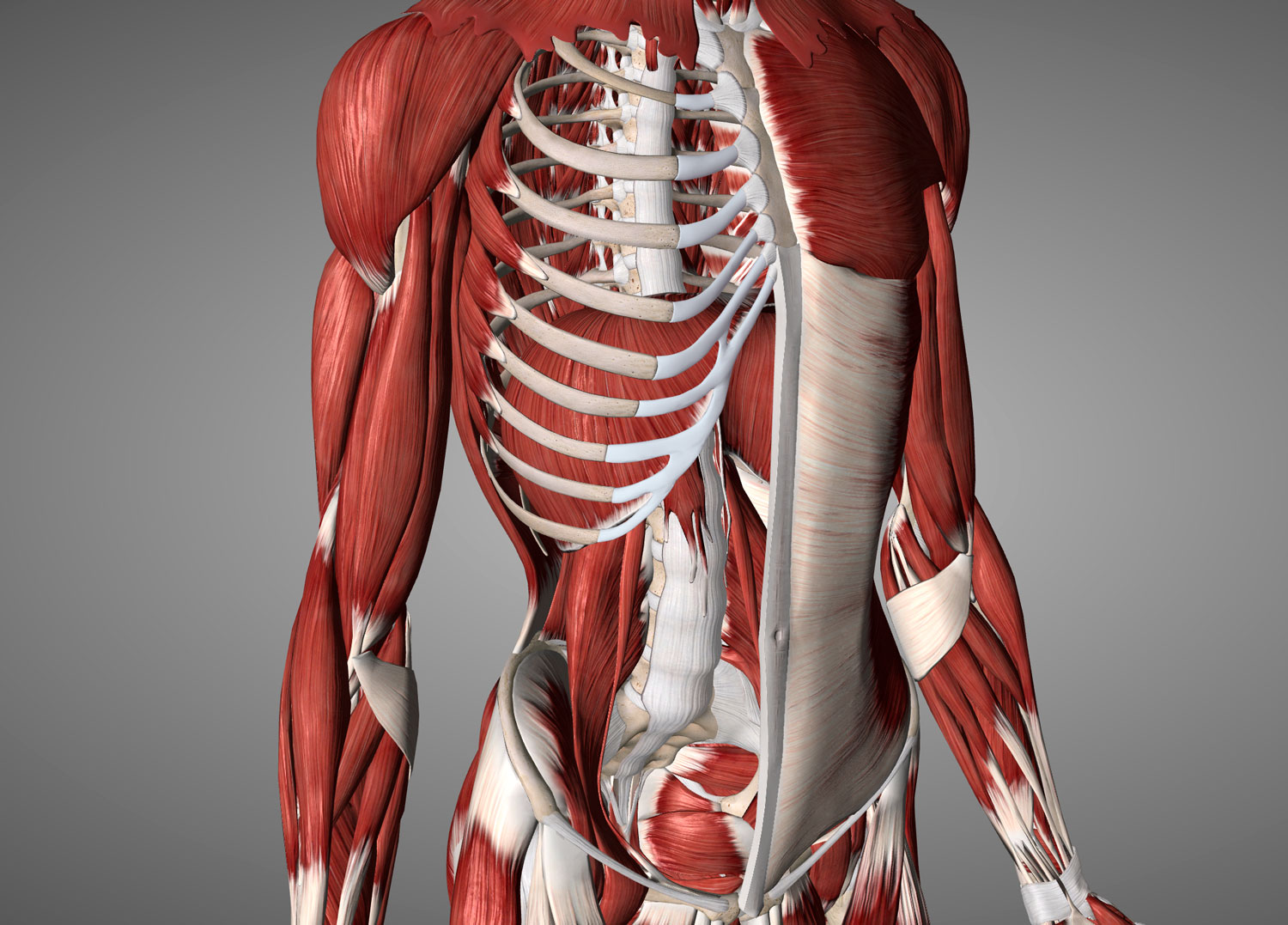
Your torso creates a very similar closed pressure system bounded by four key anatomical structures:
- Top (The Lid): The Respiratory Diaphragm
- Bottom (The Base): The Pelvic Floor Muscles
- Front and Sides (The Walls): The Transverse Abdominis and Abdominal Wall
- Back (The Pillar): The Lumbar Spine and Paraspinal Musculature
When you prepare to lift a heavy weight, carry a load, or execute an explosive movement, your brain coordinates these four walls in a precise sequence:
- Inhalation: The diaphragm contracts and moves downward into the abdominal cavity, compressing the internal organs.
- Containment: Rather than letting the abdomen distend outward or the floor drop downward, the pelvic floor and abdominal wall contract isometrically to resist the expanding lungs.
- Pressurization: This simultaneous downward push and outward containment creates high pressure within the abdominal cavity.
How Pressure Translates to Spinal Stability
This internal pressure acts directly on the lumbar spine in two key biomechanical ways:
1. Hydraulic Support and Load Unloading
The pressurized abdominal cavity forms an “anterior fluid column” in front of the spine. When you bend over or squat, the weight pulls your torso into flexion. The pressurized cylinder pushes back from the front, taking a significant percentage of the axial load off your intervertebral discs and paraspinal muscles.
2. Hoop Tension and Fascial Stiffening
As the deep abdominal muscles (particularly the transverse abdominis) contract around the pressurized cavity, they create hoop tension. This pulling action tightens the thoracolumbar fascia—a dense sheet of connective tissue in your lower back—effectively wrapping the lumbar vertebrae in a natural weightlifting belt that limits dangerous shearing forces between individual spine segments.
Programming Proper IAP: Cues for Training
To train and harness intra-abdominal pressure effectively in the gym or during daily life, focus on these motor patterns:
1. Master 360-Degree Diaphragmatic Breathing
Place your thumbs on your flanks (sides) and fingers on your lower abdomen. Inhale through your nose and focus on pushing your hands outward in every direction—front, sides, and back—without letting your shoulders shrug upward.
2. Brace Over the Expansion
Once you’ve expanded your abdominal cavity with air, contract your core muscles as if preparing to take a light punch to the stomach. The goal is to harden the wall over the expansion, preserving the internal volume and pressure.
3. Match Pressure to the Task
Not every movement requires maximum IAP. Picking up a pencil requires minimal pressure, whereas a heavy deadlift or squat demands maximal pressure (often reinforced by a short-duration Valsalva maneuver). Training your nervous system to scale IAP appropriately prevents unnecessary stiffness during light daily movements while ensuring maximum protection under heavy stress.
Your spine is not a fragile stack of blocks waiting to collapse; it is an incredibly resilient structure when supported by its surrounding pressure system. By training the diaphragm, pelvic floor, and abdominal wall to work as a unified pressurized unit, you transform your core into a built-in suspension system that protects your back for life.
Activating the correct muscles is only part of the battle. Before we can properly build this control, we need to identify and correct the compensation pattern you have been using to stabilize previously. This is where a detailed assessment from a specialized physiotherapist can take your core training to the next level.