
While throwing looks like a simple arm motion, throwing is actually a kinetic chain—a sophisticated transfer of energy that begins at the toes and ends at the fingertips. If there is a single weak spot in this chain, it all falls apart. When playing catch in the backyard with your son, that might be a little shoulder stiffness or pain. For an elite MLB pitcher, that can eventually end up in the dreaded Tommy John surgery.
Anatomy + Mechanics + Skill = Peak Performance
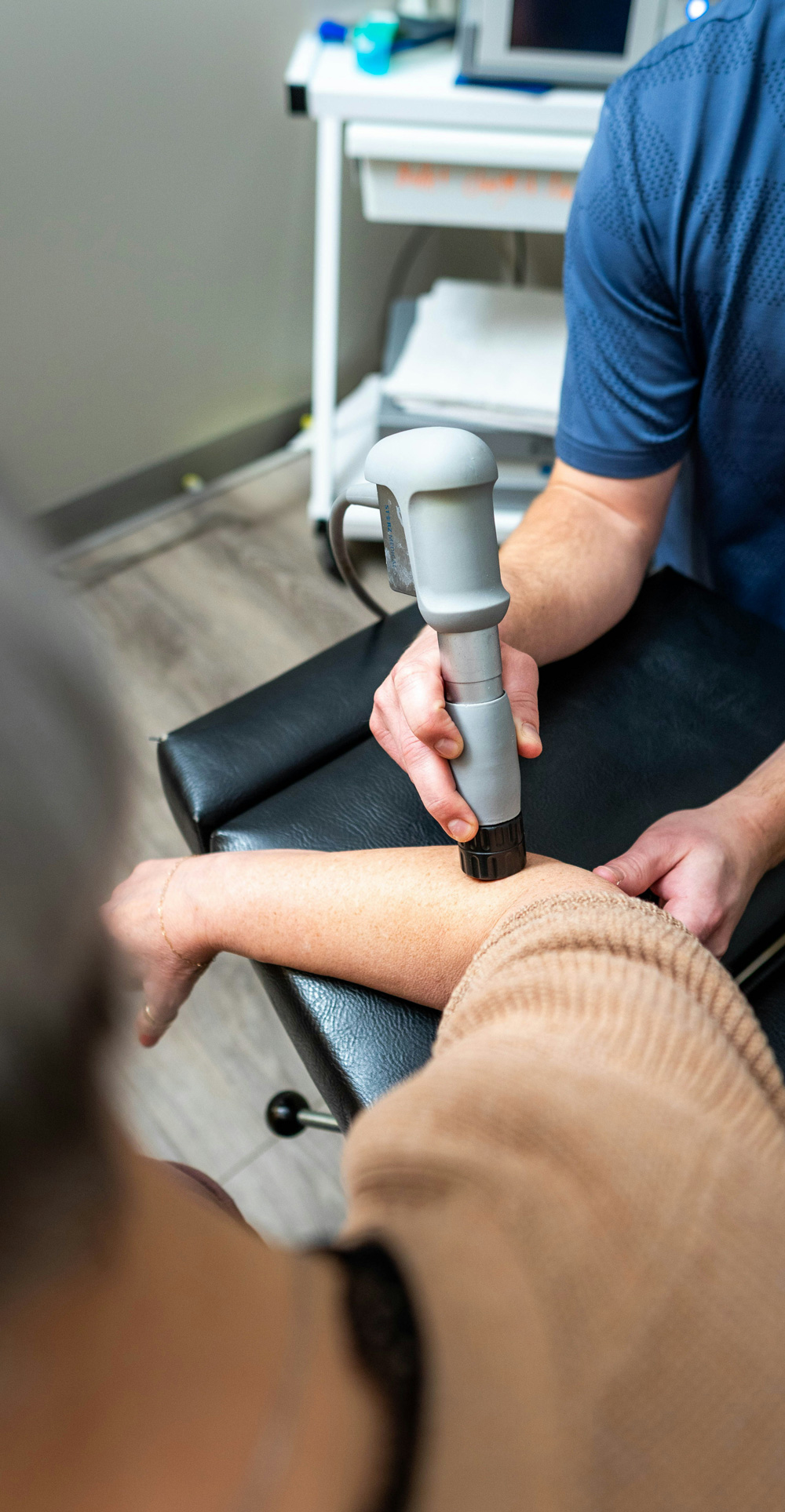
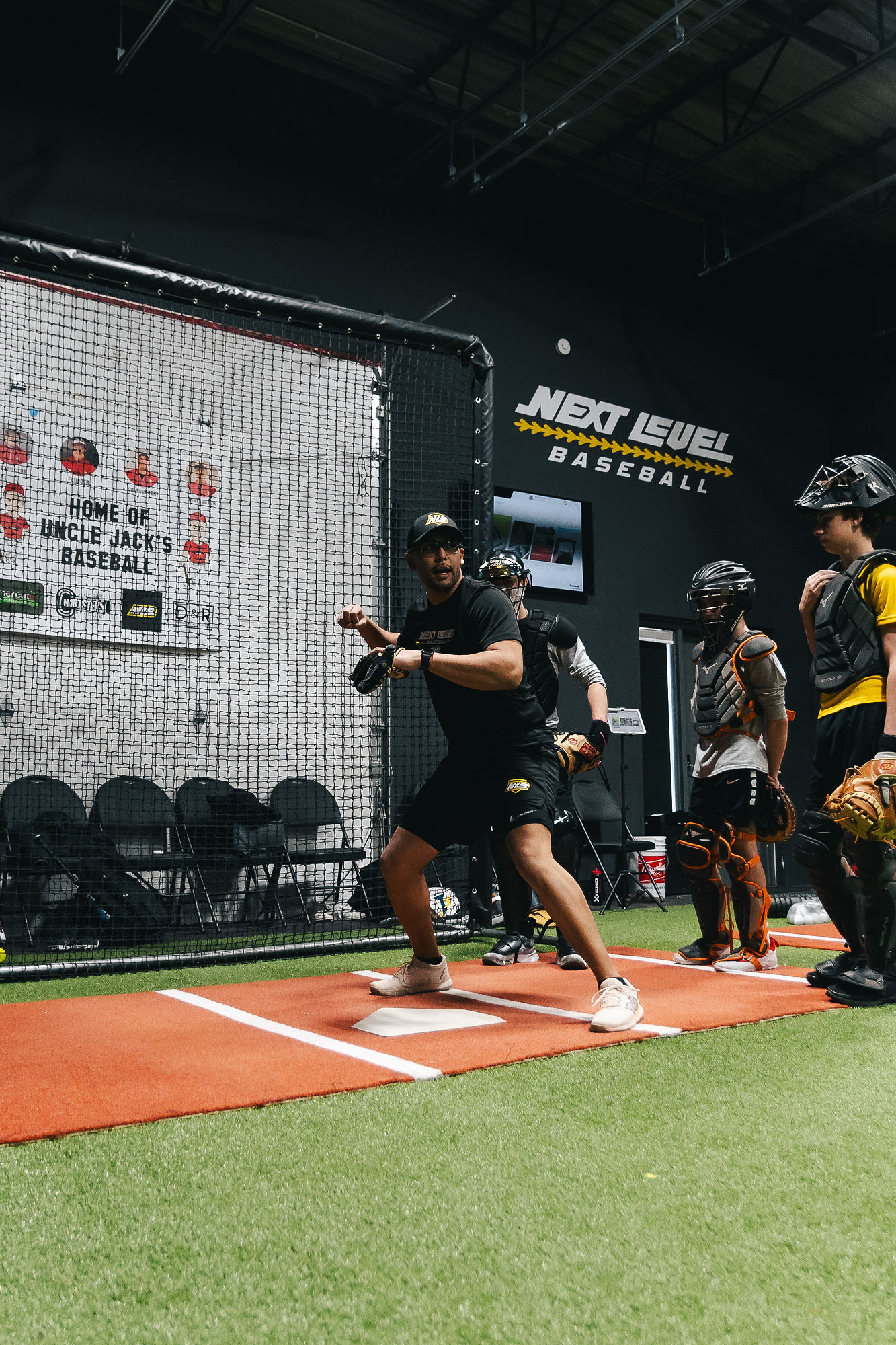
To truly unlock an athlete’s potential, you have to look past the scoreboard and dive deep into the athlete’s anatomy and biomechanics. This is where the powerhouse duo of Next Level Baseball and the Institute for Sports Physiotherapy shine. When an athlete trains with the pros at Next Level Baseball in Windsor, they are learning the tactical skills required to dominate the game. But if the kinetic chain has a weak link—such as poor hip mobility or an unstable shoulder blade—the athlete cannot physically execute those skills safely or efficiently. The collaboration between the expert coaches at Next Level Baseball and the sports-specialized clinicians (Sports Physio, Athletic Therapy and Sports Dietitian) can help address the biomechanical, physiological and metabolic limitations to their training, helping to get the athlete to the Next Level and keep them on the mound.
1. The Foundation: Ground Force and the Stride
A powerful throw doesn’t start in the shoulder; it starts in the dirt. The process begins with linear momentum. As a thrower strides toward their target, they push off their back leg, deriving energy from their entire leg and beginning the forward movement of the ball.
This phase is about building potential energy. If you try to throw using only your arm while standing completely still, you’ll find your power is capped. By striding, you’re engaging the massive muscles of the glutes and quads to kickstart the engine.
2. Hip-Shoulder Separation
The “secret sauce” of elite throwers is a concept called hip-shoulder separation. As the lead foot plants, the hips rotate forcefully to face the target. However, the upper body—the shoulders and torso—stays back for a fraction of a second longer.
This creates a “stretching” effect across the core, much like pulling back a rubber band. This elastic energy is stored in the obliques and a series of what we call fascial slings. When the torso finally follows the hips and whips around, that stored energy is released with explosive speed.
3. The Treacherous “L” and Late Cocking
As the torso rotates, the arm enters the cocking phase. The elbow rises to shoulder height, and the forearm drops back into extreme external rotation. To the casual observer, it looks like the arm is bending backward in an unnatural way and may have even dislocated.
Mathematically, this increases the distance over which force can be applied to the ball. The shoulder acts as a fulcrum or pivot point, and the arm acts as a long lever. The greater the external rotation, the more “runway” the ball has to accelerate before release.The same storage of energy in the fascial slings and muscle we talked about in stage 2 happens here as well in the chest and shoulder muscles.
4. Acceleration and the Internal Rotation
Once the shoulder reaches its maximum backtrack, the acceleration phase begins. This is the fastest motion in all of human sports. The humerus (upper arm bone) internally rotates at speeds exceeding 7,000 degrees per second in professional pitchers.
The energy that started in the legs has now traveled through the core, into the shoulder, down the arm, and is finally concentrated in the wrist and fingers.
5. Release and Deceleration: The Great Dissipation
The final “snap” of the wrist provides the directional accuracy and, in many cases, the spin (or revolutions) that stabilize the object’s flight. But the work isn’t over once the ball leaves the hand.
The body must now perform deceleration. The muscles in the back of the shoulder (part of the rotator cuff) have to slam on the brakes to prevent the arm from literally flying out of its socket. A smooth follow-through allows this energy to dissipate safely across the entire body rather than being absorbed solely by the shoulder joint. This explains why pitchers usually have a followthrough step off the mound to ease that transition.
Summary
Throwing is a masterpiece of biological engineering. It is the perfect marriage of Newton’s Laws of Motion and human anatomy. By mastering the kinetic chain—from the ground up—athletes turn their entire bodies into a single, fluid catapult. One stiff joint, weak muscle or slow reaction can be the achilles heel to a great pitching career. At the Institute for Sports Physiotherapy and Performance along with our colleagues at Next Level Baseball in Windsor, this is what we look for. The slightly bent needle in a stack of other needles. If you are pushing the limits of throwing, give Next Level Baseball a call to address the skills and technique and book an assessment at ISP with James for a detailed look at your mechanics. This can rehab current problems, prevent future ones and even increase the efficiency and throwing performance.